
Social media is not just for food photos and selfies. It is also a powerful tool to sell restaurant equipment. Many owners and chefs use Facebook, Instagram, LinkedIn, and TikTok every day. If your brand is not active there, you may miss many sales.
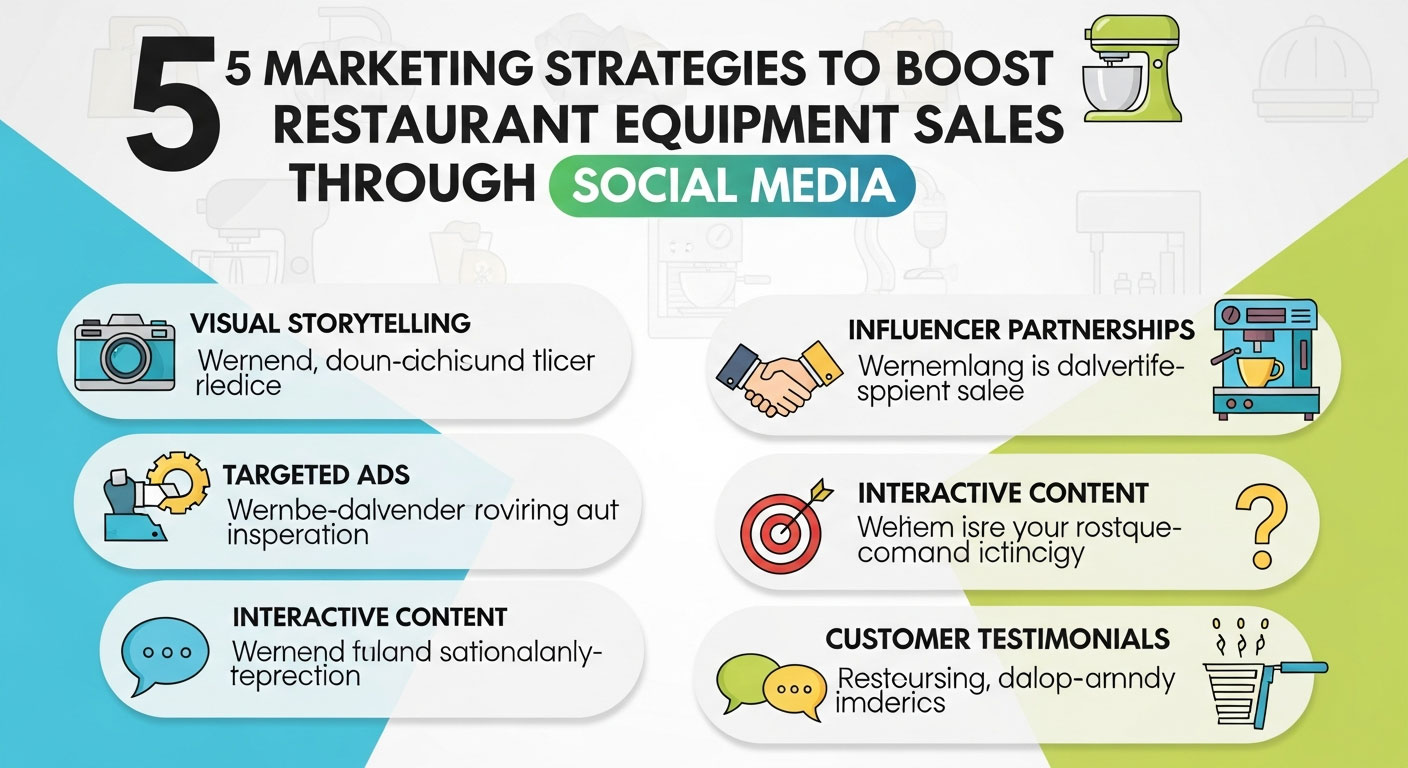
Below are five simple marketing strategies you can use to boost restaurant equipment sales through social media.
1. Use Clear Photos and Short Videos
People who run restaurants are very visual. They want to see how a product looks and how it works. Long text with technical details can come later. First, you must catch their eye.
Post content like:
● Photos of your ovens, fryers, and fridges in real kitchens
● Short videos that show how fast a machine works
● “Before and after” posts of a kitchen upgrade
Try to show real results. For example, show how many dishes can be cooked at one time, or how much space a new fridge can save. Clear images and short clips help buyers imagine this equipment in their own kitchen.
2. Share Customer Stories
Owners trust other owners. One of the best ways to sell more is to share real stories from your happy customers.
You can:
● Ask a chef to share how your oven helped speed up service
● Post a quote from a café owner about saving energy with your new fridge
● Share a mini case study in a simple format: Problem → Your Product → Result
For example:
“A busy burger shop was facing long wait times. After installing our high-speed grill, they reduced ticket times by 25%.”
Turn each story into:
● A post on Facebook or LinkedIn
● A photo and a quote on Instagram
● A short video testimonial, if the customer agrees
These stories build trust and show that your products work in real life.
3. Teach, Don’t Just Sell
If every post is “Buy now,” people will scroll past you. Instead, use your social media to educate your audience. When you teach owners how to solve problems, they begin to see you as an expert, not just a seller.
Ideas for helpful content:
● “How to choose the right freezer for a small restaurant.”
● “Signs your fryer is costing you money”
● “Easy daily cleaning tips to make equipment last longer”
Use simple words and short sentences. Break tips into lists. You can still mention your products, but focus on helping first. Over time, people will think of you when they need new restaurant equipment or want to upgrade.
4. Run Simple, Targeted Ads
Organic posts are good, but paid ads can help you reach more of the right people. The good news is you do not need a huge budget. You just need to target your ads well.
On Facebook, Instagram, and LinkedIn, you can:
● Target restaurant owners, managers, and chefs
● Focus on people interested in “food service,” “hospitality,” or “restaurant business.”
● Show ads to people who visited your website before (retargeting)
Ad ideas:
● A carousel ad showing different pieces of equipment
● A short video showing one main benefit
● A promo ad with a discount, free install, or financing
Always add a clear call to action, such as:
“Request a quote,” “Book a free demo,” or “Send us a message.”
Make it very easy for people to take the next step.
5. Talk With Your Audience, Not At Them
Social media is not a one-way channel. It is a place to talk with people. When you reply and engage, you build real relationships.
Make it a habit to:
● Answer comments and questions quickly
● Reply to direct messages in a friendly tone
● Thank customers who tag you in photos
● Join restaurant and foodservice groups on Facebook and LinkedIn
You can also host:
● Live Q&A sessions like “Ask an Equipment Expert.”
● Short-lived tours of a new kitchen setup
● Simple webinars on topics like “How to design a small kitchen that works”
These activities show that you care and that you are available to help. When a buyer is ready to spend money, they will remember the brand that was helpful and easy to reach.
Final Thoughts
To boost restaurant equipment sales through social media, focus on five things: strong visuals, real customer stories, helpful education, smart ads, and real conversation. When you do these consistently, more people will know your brand, trust your advice, and contact you when it is time to buy.
